

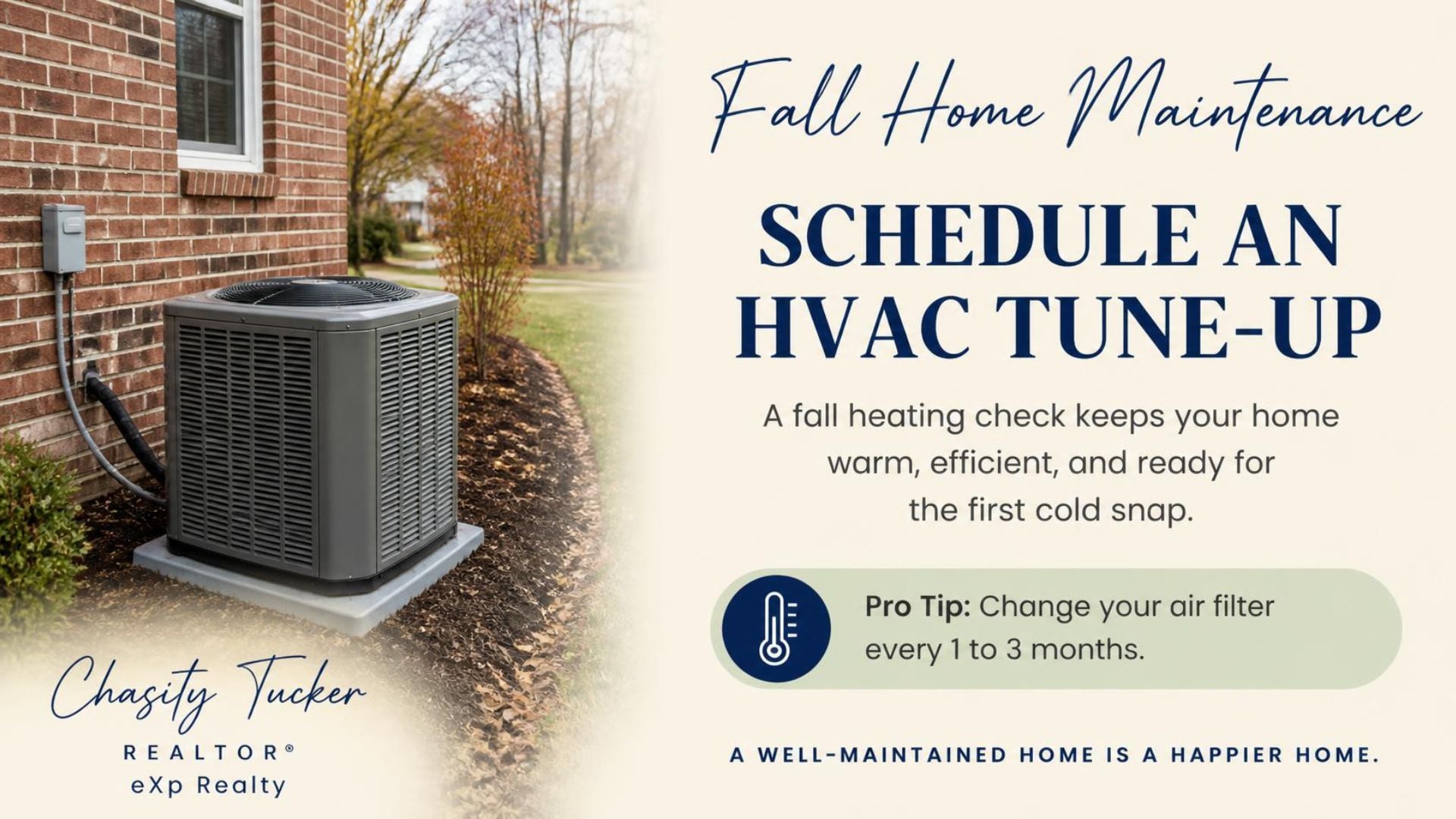
Home Maintenance · Clarksville & Montgomery County
There’s a special kind of Clarksville panic that sets in the first truly cold morning of the year. You flip the thermostat to heat, wait for that comforting whoosh, and get… nothing. Or a clunk. Or the smell of a thousand dust bunnies being roasted at once. A fall HVAC tune-up is how you avoid starring in that scene.
Your heating system is one of the most expensive pieces of equipment in your home, and it’s one of the first things a buyer’s inspector looks at when you sell. Here’s what a good heating check covers, what you can handle yourself, and how to keep your system running smoothly all winter.
- Schedule a professional HVAC tune-up before the first hard cold snap, when service calls spike.
- Change your air filter now and on the schedule your system’s manufacturer recommends.
- Heat pumps, common in Clarksville, need their defrost cycle and backup heat checked.
- Gas furnaces need a working carbon monoxide detector nearby, no exceptions.
- Service records help buyers trust your home when it’s time to sell.
“One of the first questions buyers ask at a showing is, ‘How old is the HVAC?’ The second is, ‘Has it been serviced?’ I love when my sellers can answer both with a receipt.”
Chasity Tucker, REALTOR®, eXp Realty
When should I schedule an HVAC tune-up in Clarksville?
Schedule your heating tune-up in October or early November, before the first sustained cold weather. HVAC companies get flooded with calls the moment temperatures drop, and an urgent no-heat call on a freezing night is the most stressful, and often most expensive, way to get service.
If your system handles both heating and cooling, many homeowners schedule two visits a year: a cooling check in spring and a heating check in fall. Some local HVAC companies offer maintenance plans that bundle those visits. Ask what’s included before you sign up so you know what you’re paying for.
What does a heating tune-up include?
A good heating tune-up is a checkup for your system’s safety, efficiency, and reliability. Exact checklists vary by company and equipment type, but here’s what you can generally expect:
- Thermostat check: confirming it reads the temperature correctly and switches between modes properly.
- Electrical inspection: tightening connections and testing components like capacitors and contactors.
- Airflow check: inspecting the blower, filter, and ductwork for restrictions.
- Burner and flame inspection on gas furnaces, plus checking the flue and venting.
- Heat strip or backup heat test on heat pumps and electric systems.
- Condensate drain check to prevent water backups.
- Safety controls test to make sure the system shuts down properly if something’s wrong.
Ask the technician for a written summary of what they found and any recommendations. Keep it in your home file. It’s useful for your own records and a gold star when you sell.
What should heat pump owners know about winter?
Heat pumps are common in Clarksville homes, and they work a little differently in winter than a furnace. A heat pump moves heat from the outdoor air into your home, which works efficiently in our typically mild winter weather. On very cold days, it may lean on backup or auxiliary heat, which uses more electricity.
A few heat pump specifics to ask your technician about:
- Defrost cycle: in cold, damp weather, frost builds on the outdoor unit, and the system periodically runs a defrost cycle. Some steam from the unit during defrost is normal.
- Auxiliary and emergency heat: confirm both work, and learn what your thermostat shows when they’re running.
- Outdoor unit clearance: keep leaves, mulch, and shrubs cleared from around the unit so air can flow.
Good to know: setting your thermostat to “Emergency Heat” is meant for when the heat pump itself isn’t working. Running it as your everyday setting can raise your electric bill.
What should gas furnace owners watch for?
Gas furnace owners should focus on safety first. Make sure you have a working carbon monoxide detector near sleeping areas and near the furnace, and test it along with your smoke detectors. Clarksville Gas & Water has long recommended having natural gas heating systems cleaned and inspected regularly.
Warning signs worth a call to a licensed technician include a yellow or flickering burner flame instead of a steady blue one, soot around the furnace, unusual noises, a system that short-cycles on and off, or any smell of gas. If you ever smell gas inside your home, leave the house and call for help from outside.
Which HVAC maintenance can I do myself?
You can handle the simple, ongoing maintenance yourself and leave the technical work to pros. The DIY list is short and genuinely easy:
| Task | How often | DIY or pro? |
|---|---|---|
| Replace air filter | Per manufacturer, often every 1–3 months | DIY |
| Clear vents and returns | Seasonally | DIY |
| Clear leaves around outdoor unit | Fall and as needed | DIY |
| Test thermostat and replace batteries | Each fall | DIY |
| Test CO and smoke detectors | Monthly test, batteries yearly | DIY |
| Full heating tune-up | Yearly, in fall | Pro |
| Electrical, gas, or refrigerant work | As needed | Pro only |
Write the filter size on the side of your unit with a marker or on a sticky note in your phone. You’ll thank yourself every time you’re standing in the hardware store aisle trying to remember if it’s a 16×25 or a 20×25.
How can I lower my heating bill this winter?
Lowering your heating bill comes down to keeping warm air in and letting your system run efficiently. Seal drafts around doors and windows, keep vents unblocked, change filters on schedule, and reverse your ceiling fans to spin clockwise on low to push warm air down.
A programmable or smart thermostat can help, too, as long as you avoid big temperature swings that make the system work harder to catch up. If you’re on CDE Lightband for electricity, their website lists energy efficiency resources and an option to talk with an energy pro, which is worth a look if your winter bills have been climbing.
What’s that smell when the heat first comes on?
A faint burning-dust smell the first time your heat runs each season is usually just dust burning off heat strips or the heat exchanger, and it typically fades within an hour or so. Opening a window briefly helps. A smell that lingers, smells electrical, or smells like gas is different. Shut the system off and call a technician, and if you smell gas, leave the home first.
How old is too old for an HVAC system?
There’s no single age when a system must be replaced, but lifespans depend heavily on the equipment type, how hard it’s worked, and how well it’s maintained. Your technician can tell you the age of your equipment from its data plate and give you an honest read on its condition.
If your system is getting older, start budgeting for replacement before it fails rather than after. Replacing a system on your own schedule, in a mild month, is a lot calmer than replacing it during a January cold snap when every installer in town is booked.
How does HVAC condition affect selling my home?
HVAC age and condition show up in almost every buyer conversation and every inspection report. A system with service records and a clean inspection gives buyers confidence. A system with no records and a few red flags gives buyers a reason to ask for repairs, credits, or a lower price.
If you’re planning to sell in the spring, a fall tune-up now does double duty. It keeps you comfortable this winter and gives you documentation to share with buyers. It also helps you answer questions accurately on the Tennessee Property Condition Disclosure. When I prepare a listing, the HVAC service history is one of the first things I ask for.
Frequently Asked Questions
How often should I get an HVAC tune-up?
Most HVAC professionals recommend a heating check once a year in the fall and a cooling check in the spring. Annual service helps catch small problems before they become no-heat emergencies.
How often should I change my air filter?
Follow your system and filter manufacturer’s recommendation, which is often every one to three months. Homes with pets or heavy dust may need more frequent changes.
Is it normal for my heat pump to steam in winter?
Yes. In cold, damp weather, a heat pump periodically runs a defrost cycle to clear frost from the outdoor unit, and some steam during defrost is normal. Call a technician if the unit stays iced over.
Does HVAC age affect my home’s sale price?
It can. Buyers and inspectors pay close attention to HVAC age and condition. Service records and a recent tune-up help reassure buyers and reduce repair requests during negotiations.
Getting your home ready for a spring sale?
Winter is the perfect time to plan. I’m happy to walk through your home, point out the maintenance items buyers care about most, and share my list of trusted local HVAC pros. Let’s make your spring listing as smooth as possible.