Home Maintenance · Clarksville & Montgomery County
If there’s one villain in the story of a Middle Tennessee home, it’s water in the wrong place. Not snow, not even ice most years, but plain old cold rain that pools, drips, seeps, and sneaks into places it absolutely does not belong. That’s why checking your gutters, roof, and drainage before winter is one of the smartest things a Clarksville homeowner can do.
I see the results of this, good and bad, in nearly every inspection report I read. Roof wear, clogged gutters, soggy crawl spaces, and grading that slopes toward the house all show up as repair requests when a home sells. Let’s keep your home off that list.
- Clean gutters after most leaves have dropped, usually mid to late November in Clarksville.
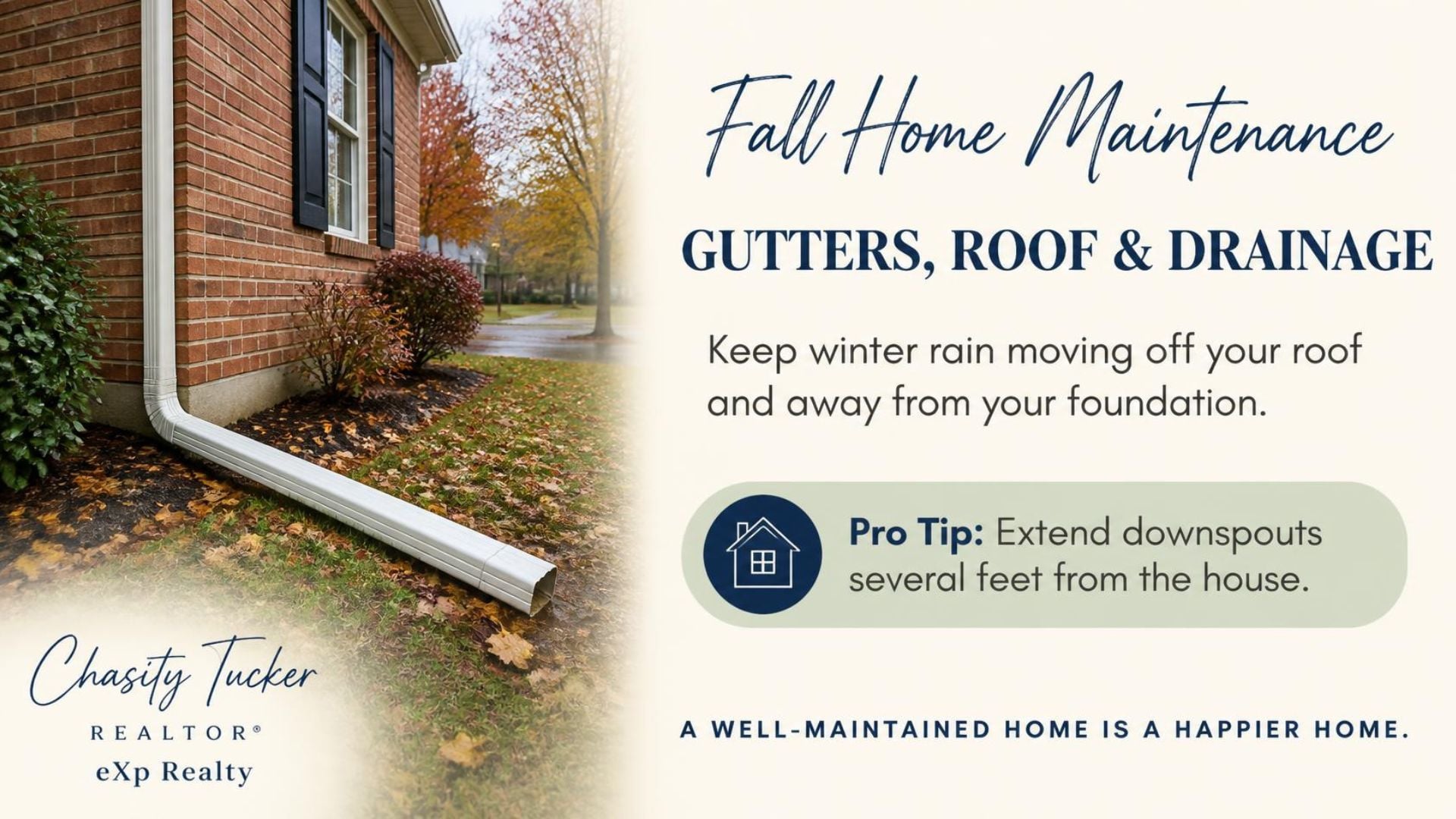
- Downspouts should discharge water several feet away from your foundation.
- Look for missing shingles, damaged flashing, and sagging gutters from the ground.
- Soil should slope away from the house so water drains outward.
- Leave roof work and steep or tall ladder jobs to licensed, insured pros.
“Water is patient. It will find the one clogged downspout or the one cracked boot around a vent pipe. Winter prep is about getting there first.”
Chasity Tucker, REALTOR®, eXp Realty
Why do gutters, roof, and drainage matter so much in Middle Tennessee winters?
They matter because our winters bring a lot of cold rain, and the job of your gutters, roof, and grading is to move that water off and away from your home. When any piece fails, water ends up where it can cause damage: under shingles, behind fascia boards, against the foundation, or in the crawl space.
Water problems are also some of the most expensive to fix and some of the most noticeable to buyers. A stained ceiling or a damp crawl space makes buyers nervous, even if the fix turns out to be simple. Prevention is cheaper, and it’s a lot less stressful.
When should I clean my gutters in Clarksville?
Clean your gutters once most of the leaves have fallen, which in Clarksville usually means mid to late November. If you have a lot of oaks, maples, or pines nearby, you may need a second cleaning in December. Cleaning too early means doing it twice. Cleaning too late means heading into winter rain with gutters full of soggy leaves.
- Scoop out debris by hand or with a gutter scoop, working away from the downspout.
- Flush with a hose to confirm water flows freely toward the downspouts.
- Check downspouts for clogs by running water through from the top.
- Look for sagging sections or loose hangers that let water pool or spill over.
- Watch for leaks at seams and corners while the water runs.
Safety first: if your home is two stories, has a steep roof, or you’re not comfortable on a ladder, hire a gutter or roofing pro. Falls from ladders are a real risk, and no amount of leaves is worth it.
Are gutter guards worth it?
Gutter guards can reduce how often you need to clean, especially if you live under big trees, but they aren’t maintenance-free. Debris can still collect on top of some guards, and fine debris can work its way through. If you’re considering them, ask installers how their product handles the specific trees around your home, what maintenance it still needs, and what the warranty covers.
Where should my downspouts drain?
Your downspouts should send water several feet away from your foundation, not dump it right next to the house. Many homes have short elbows at the bottom of each downspout that drop water within a foot of the wall, which is a recipe for soggy soil against your foundation.
Simple fixes include downspout extensions, splash blocks, or flexible extensions you can move when you mow. Some homes have underground drain lines that carry water to the yard or a pop-up emitter. If yours does, make sure those lines aren’t clogged by running a hose into the downspout and watching where the water comes out.
How can I tell if my roof needs attention before winter?
Do a ground-level inspection with binoculars on a clear day, and look for anything that seems out of place. You don’t need to climb up to spot the most common warning signs.
| What you see | What it can mean | Next step |
|---|---|---|
| Missing or lifted shingles | Wind damage or aging roof | Call a roofer for repair |
| Granules in gutters | Shingle wear | Ask a roofer to assess remaining life |
| Damaged flashing at chimney or vents | Common leak point | Have it resealed or replaced |
| Cracked pipe boots | Leaks around plumbing vents | Inexpensive repair by a roofer |
| Sagging roofline | Possible structural issue | Get a professional evaluation |
| Stains on ceilings or in the attic | Active or past leak | Find and fix the source quickly |
Also take a peek in your attic with a flashlight after a heavy rain. Look for damp insulation, water stains on the underside of the roof deck, or daylight where there shouldn’t be any. Catching a small leak in November is far better than discovering it in February.
How do I know if my yard drains properly?
Walk your property during or just after a hard rain. That’s the best way to see where water actually goes. Ideally, the soil around your home slopes away from the foundation so water drains outward. Watch for puddles near the house, water running toward the foundation, or soggy spots that stay wet for days.
Common fixes range from simple to involved:
- Adding soil to rebuild a slope away from the house
- Pulling mulch and soil back from siding so they don’t hold moisture against it
- Extending downspouts or adding underground drain lines
- Installing a French drain or regrading part of the yard, usually a job for a pro
Middle Tennessee’s clay soil holds water and drains slowly, which makes grading especially important here. If you’re seeing standing water against the house, it’s worth having a drainage contractor or foundation professional take a look.
What about crawl spaces and basements?
Crawl spaces and basements show you whether your exterior drainage is doing its job. After a big rain, peek in with a flashlight. Standing water, damp soil, musty smells, or wet insulation are signs that water is getting in. Many Clarksville homes have crawl spaces, and a moisture issue there can lead to bigger problems if it’s ignored.
Make sure any vapor barrier is in place, crawl space vents are set appropriately for the season, and sump pumps, if you have one, are working. If you see ongoing moisture, a crawl space specialist can recommend options. Get more than one opinion on large projects.
How do roof and drainage issues affect selling my home?
Roof age and condition, along with any signs of water intrusion, are some of the first things buyers and inspectors focus on. A roof near the end of its life can affect financing and insurance for some buyers, and visible water damage often leads to repair requests or price negotiations.
If you’re planning to sell in the next year or two, now is a great time to know where your roof and drainage stand. Keep records of any roof work, gutter installs, or drainage improvements. Those receipts help you answer questions accurately on the Tennessee Property Condition Disclosure, and they give buyers confidence that the home has been cared for.
Frequently Asked Questions
When should I clean my gutters in Clarksville, TN?
Clean gutters after most leaves have fallen, usually mid to late November in Clarksville. Homes with many trees may need a second cleaning in December.
How far should downspouts drain from the house?
Downspouts should discharge water several feet away from the foundation. Extensions, splash blocks, or underground drain lines can help move water away from the house.
How can I check my roof without climbing on it?
Use binoculars from the ground on a clear day to look for missing or lifted shingles, damaged flashing, cracked pipe boots, and sagging gutters. Check the attic with a flashlight after heavy rain for signs of leaks.
Does roof condition affect selling a home?
Yes. Buyers and inspectors pay close attention to roof age and condition and any signs of water damage. Records of roof repairs or replacement help buyers feel confident.
Want a seller’s-eye walk-through before spring?
If you’re thinking about listing next year, I’m happy to walk your home and point out the roof, gutter, and drainage items buyers notice most. I’ll also share the local pros my clients trust, so you can tackle the right fixes before you list.