

Home Maintenance · Clarksville & Montgomery County
Here’s a sentence no homeowner wants to say: “Why is there water coming out of the ceiling?” A burst pipe is one of the most stressful, expensive winter surprises a house can throw at you. The good news is that it’s also one of the most preventable. If you want to prevent frozen pipes in your Clarksville home, the time to act is right now, before the first hard freeze.
I’ve seen what a single cold night can do to an unprotected outdoor faucet or a crawl space line, both during inspections and in listings I’ve helped get back on track. This post walks through exactly what to do, room by room, so your pipes make it to spring without drama.
- Clarksville’s average first fall frost arrives around October 27, so outdoor water comes first.
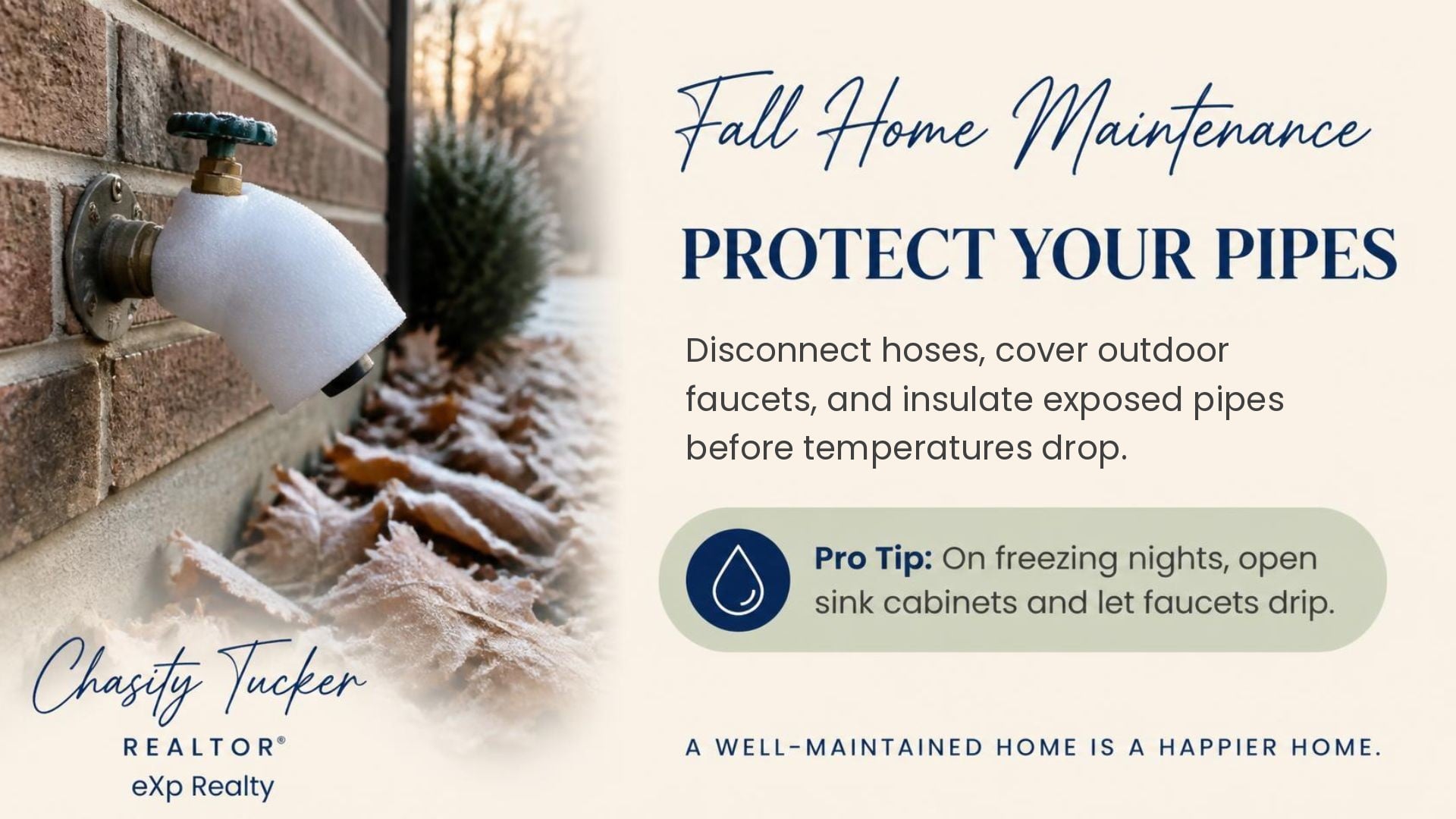
- Disconnect hoses, drain irrigation, and cover or insulate outdoor faucets.
- Pipes in crawl spaces, garages, and exterior walls are the most vulnerable.
- On very cold nights, open sink cabinets and let a slow trickle run.
- Know where your main water shutoff is before you ever need it.
“Twenty minutes with a foam faucet cover and some pipe insulation is the cheapest insurance policy you’ll ever buy. Your future self, and your future buyer, will thank you.”
Chasity Tucker, REALTOR®, eXp Realty
When do I need to start protecting pipes in Clarksville?
Start protecting your pipes by late October. According to the Old Farmer’s Almanac, using NOAA’s 1991–2020 climate normals for the Clarksville station, the average first fall frost falls around October 27. A light frost won’t usually freeze a pipe, but our winters bring stretches of hard freezes, and those quick cold snaps are exactly when unprepared pipes get caught off guard.
Middle Tennessee’s weather is famously moody. We can have a 70-degree afternoon followed by a teens-overnight freeze in the same week. That swing is why it’s smart to handle the prep work early rather than scrambling when the forecast turns.
Why do pipes freeze and burst?
Pipes burst because water expands as it freezes, which builds pressure inside the pipe until something gives. Often the break isn’t where the ice formed. Pressure builds between the ice blockage and a closed faucet, and the pipe splits there.
The pipes most at risk are the ones exposed to cold air: outdoor faucets, irrigation lines, pipes in crawl spaces and unheated garages, and lines that run along exterior walls. Homes with crawl spaces, which are common across Clarksville, deserve extra attention.
How do I protect outdoor faucets and irrigation lines?
Disconnect, drain, and cover. Clarksville Gas & Water has long recommended detaching garden hoses from outdoor faucets and yard meters, insulating outdoor faucets, draining irrigation lines, and protecting backflow preventers before freezing weather arrives.
- Disconnect every hose. A connected hose traps water in the faucet, where it can freeze and crack the pipe inside the wall.
- Drain and store hoses in the garage or shed so they last longer.
- Add foam faucet covers. They cost a few dollars at any hardware store and take seconds to install.
- Shut off and drain irrigation systems, or have your sprinkler company blow out the lines.
- Protect the backflow preventer with an insulated cover if your system has one above ground.
- Keep your water meter lid closed so cold air doesn’t reach the meter.
If your home has an interior shutoff valve for outdoor faucets, turn it off and open the outdoor faucet to drain the line. Many newer homes have frost-free faucets, which help, but they still need the hose disconnected to work properly.
How do I protect pipes in crawl spaces, garages, and exterior walls?
Insulate exposed pipes and block cold air from reaching them. Clarksville Gas & Water recommends sealing gaps that let outside air in, closing foundation vents during freezing weather, and insulating or adding heat tape to exposed pipes.
- Crawl spaces: check that pipe insulation is intact, close foundation vents once freezing weather arrives if your home is designed for it, and seal obvious gaps.
- Garages: keep the garage door closed in cold weather, especially if water lines or a water heater are inside.
- Exterior walls: kitchen and bathroom sinks on outside walls are classic trouble spots.
- Heat tape: if you use it, choose a product rated for the job, follow the manufacturer’s instructions, and never wrap it over itself.
Good to know: foam pipe insulation is inexpensive, comes pre-slit, and simply snaps over the pipe. It’s one of the easiest DIY jobs on any winter checklist.
What should I do inside on the coldest nights?
On nights when temperatures are forecast well below freezing, let a little warm air and a little moving water work for you. Clarksville Gas & Water recommends opening sink cabinets so warm air can reach the pipes, especially on exterior walls, and letting a slow trickle of water run from faucets.
A few more cold-night habits:
- Keep the thermostat steady day and night rather than letting it drop sharply overnight.
- Close garage doors and any crawl space access doors.
- Move cleaning supplies out from under sinks if you’re leaving cabinet doors open and have pets.
Yes, letting the faucet drip feels wasteful. It’s a lot less wasteful than replacing drywall.
What if I’m traveling during cold weather?
If you’re leaving town, don’t turn the heat off. Clarksville Gas & Water advises keeping the thermostat at 55°F or higher while you’re away and having someone check on the house daily. Holiday travel and cold snaps tend to arrive together around here, so plan for it before you pack.
| Situation | What to do |
|---|---|
| Weekend away | Thermostat at 55°F or higher, cabinets open, hoses off |
| Week or longer | Same as above, plus a daily check by a neighbor or friend |
| Hard freeze in the forecast | Ask your house-checker to run faucets briefly and look under sinks |
| Vacant home for sale | Talk with your agent and plumber about whether to winterize |
If you own a vacant property or a home that’s listed and empty, plan winter protection carefully. A burst pipe in a vacant listing can delay a sale for weeks. I walk my sellers through this every fall.
What should I do if a pipe freezes or bursts?
If a pipe freezes but hasn’t burst, keep the faucet open and apply gentle heat, such as a hair dryer or space heater kept at a safe distance. Never use an open flame. If you can’t find the frozen section or can’t thaw it, call a licensed plumber.
If a pipe bursts, shut off the main water valve immediately, then call a plumber. That’s why Clarksville Gas & Water emphasizes knowing where your main shutoff is. Note that the utility’s technicians don’t repair household plumbing leaks or service lines on the customer’s side, so a licensed plumber is your call for repairs. After that, document the damage with photos and contact your insurance company. Coverage varies by policy, so review yours with your agent before winter rather than after.
Does winter pipe protection matter when I sell?
Yes. Past water damage, especially if it wasn’t repaired properly, is something buyers and their inspectors pay close attention to. If you’ve had a leak, keep the repair invoices and disclose it accurately on the Tennessee Property Condition Disclosure. A well-documented repair is far less worrying to a buyer than a mystery stain on the ceiling.
Preventing the problem in the first place is even better. A home that makes it through winter without water damage is simply easier to sell.
Frequently Asked Questions
At what temperature do pipes freeze in Tennessee?
Water freezes at 32°F, but exposed pipes are most at risk during extended periods well below freezing, especially overnight. Pipes in crawl spaces, garages, and exterior walls freeze first.
Should I let my faucets drip in Clarksville during a freeze?
Yes. Clarksville Gas & Water recommends letting a slow trickle of water run and opening sink cabinets during freezing weather to help protect pipes on exterior walls.
What temperature should I leave my thermostat on when I travel in winter?
Clarksville Gas & Water advises keeping the thermostat at 55°F or higher while you’re away and having someone check the home daily during cold weather.
Who do I call if a pipe bursts in my Clarksville home?
Shut off your main water valve first, then call a licensed plumber. Utility technicians don’t repair household plumbing leaks, so a plumber handles the repair. Then document the damage and contact your insurance company.
Getting your home ready to sell after winter?
If you’re thinking about listing in the spring, now is the perfect time to protect your home and plan ahead. I’m happy to walk through your home, share my list of trusted local pros, and help you put together a simple pre-listing plan.